


Scientific & Practical Journal


Editorial News
Dear readers, we are pleased to present the ninth issue of the journal “LOGISTICS” for 2026. The issue features articles that not only reflect current industry trends but also provide practical guidance for managerial decision‑making.
Dear readers! You are holding the combined issue of the “LOGISTICS” journal, in which we have collected materials for July and August 2026. It brings together practice and theory, applied solutions and bold methodological explorations.
Dear readers! We are pleased to present you with the sixth issue of the journal for 2026, in which the theory and practice of logistics are explored in a variety of relevant areas. This issue is truly multifaceted, combining reflections on the essence of logistics processes with applied calculations and industry-specific cases.
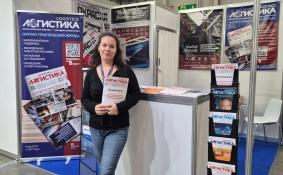
PHOTO OF THE WEEK
CITATIONS
 |
 |
 |
 |
 |
 |
 |
 |
 |
Editorial News
Published No. 7-8 of the LOGISTICS journal for 2026
Dear readers! You are holding the combined issue of the “LOGISTICS” journal, in which we have collected materials for July and August 2026. It brings together practice and theory, applied solutions and bold methodological explorations.
Let’s start with the most important industry event this autumn – the CeMAT RUSSIA 2026 exhibition. The interview, prepared by our editorial team with the exhibition team, offers a fresh perspective not only on technology and automation but also on strategy and even honest marketing. We continue to publish a series of articles dedicated to the activities of the BRICS Business Council. This time, we are introducing you to the results of the fourth meeting in New Delhi on infrastructure, transport and logistics, and showing how the countries of the association are building sustainable transport corridors and common digital principles of operation.
COMITAS, our long‑standing partner, responding to the growing market demand, has prepared an interesting article about warehouse robotization, featuring examples of real‑world implementations. COMITAS has been operating in the market since 2007 and during this time has become one of the leading full‑cycle system integrators in Russia. The “Tara. Packaging” section features an up‑to‑date article by T.V. Tindis, E.A. Romanova and S.A. Gonzhara. The authors view packaging as a full‑fledged logistics tool, identify current trends, and provide recommendations for choosing packaging solutions.
Mikhail Petrov, Product Director for “Fulfillment” at PEK, offers useful recommendations for sellers in his practical material – sellers who daily balance between speed and costs.
Our authors R.V. Martyshkin and E.S. Babichev analyze the dynamics of changes in the fleet of container ships, while M.R. Li shows how international approaches to maritime safety are integrated into the management of coastal petrochemical terminals. The “Supply Chain Management” section includes several in‑depth materials: from the methodology for diagnosing failures and managing risks in the oil and gas industry to the digital transformation of procurement and combined planning of vaccine delivery. The “Transport. Transportation” section covers the hottest technological and infrastructure topics, such as unmanned delivery, high‑speed container trains, and new solutions for the transport system of the growing agglomeration of Nizhny Novgorod.
Enjoy reading! May your supply chains be reliable and your decisions well‑founded.
We remind you that the editorial board of the “LOGISTICS” journal is open to collaboration and new topics. We invite all interested parties to take part in the work of the editorial council and in reviewing the journal’s materials. We are waiting for your suggestions at the following addresses: editor@mg-agency.com, comers@mg-agency.com
Address: 125581, Moscow, Leningradskiy avenue, 63,
floor 6, office 1
Phone: +7 (495) 788-16-96
Е-mail: sales@mg-agency.com
 |
 |
Total or partial reproduction of materials in any way
is allowed only with the written permission of the Publisher
Website developed by
alexeydoronin.com
